
What Helps Patients Remember, Understand, and Follow Through
Patients struggle with recall and follow-through after medical visits due to information overload, not motivation. Research proves that making medical information easier to understand, revisit, and act on—through tools like consultation recordings and reminders—improves outcomes. Clareo is built to translate complex conversations into clear, actionable next steps.

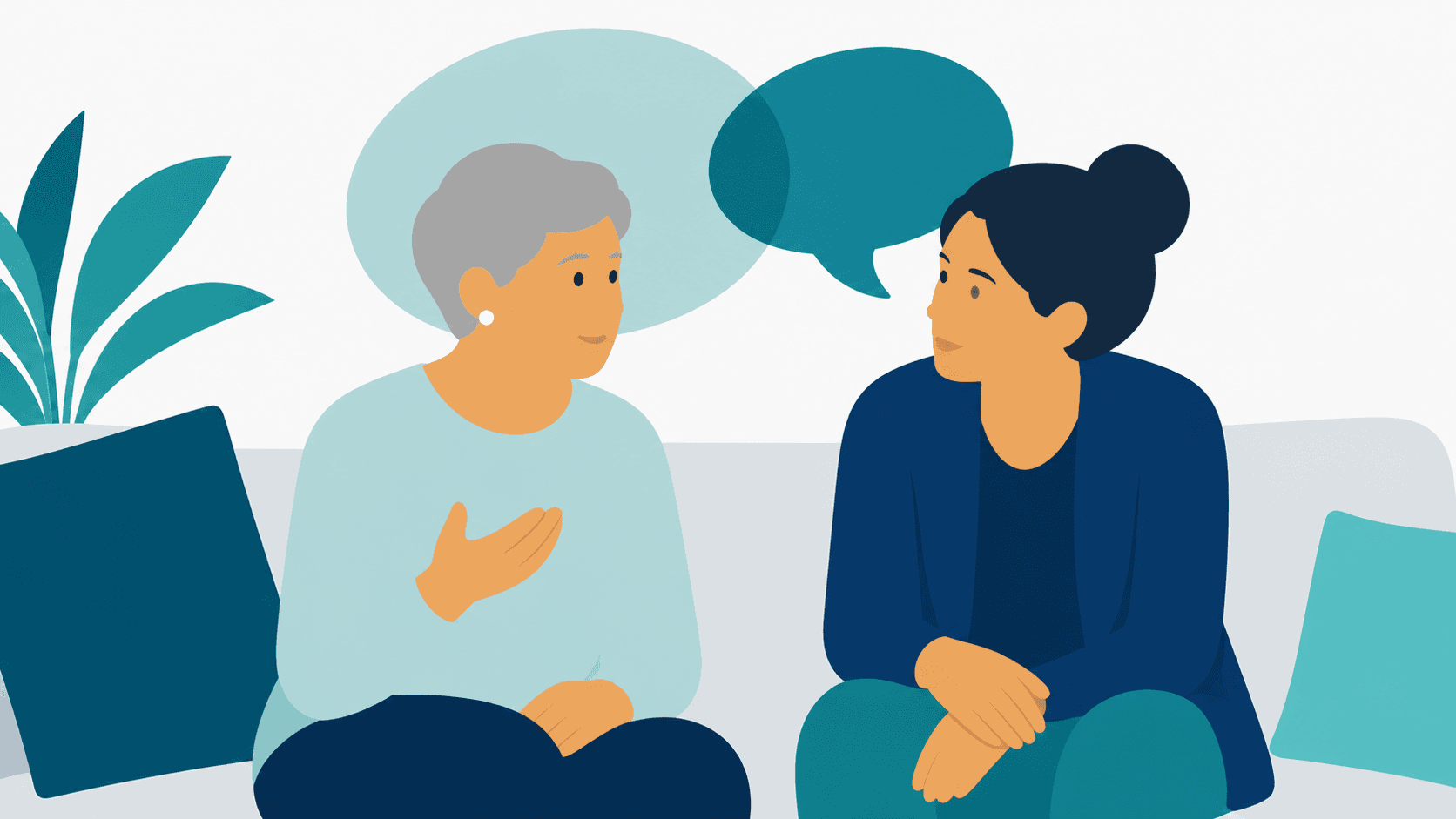
We have written before about why patients forget what doctors say.
That matters because forgetting is not a small issue. It affects understanding, confidence, and what actually happens after the appointment is over.
But the more useful question is not just why this happens.
It is what helps.
That is an important distinction for us at Clareo, because we are not building around the problem for its own sake. We are building around what seems to make things better for patients and caregivers in the real world.
And when you look at the research, a clear pattern emerges.
Patients do better when information is easier to understand, easier to revisit, and easier to act on. Not just more information. Better-designed information.[1][2][3][4][5]
That sounds simple. But it has meaningful implications.
Because when people leave a medical appointment, they are often carrying a lot at once. They may be hearing unfamiliar terminology. They may be processing emotion. They may be trying to remember changes to medications, instructions for follow-up, or signs to watch for next. Even highly engaged patients can struggle to retain all of that accurately.[1][5]
The encouraging part is that the research does not stop at describing the challenge. It also points to what helps patients remember, understand, and follow through.
Clear summaries help. Audio recordings help. Visual aids help. Teach-back helps. Plain language helps. Reminders help.[1][2][3][4][6]
That body of evidence lines up closely with how we think about Clareo.
Patients need something they can come back to
One of the clearest ideas in the literature is that patients benefit from information they can revisit after the visit is over.
That matters because even a very good conversation in the room may not be enough. A patient can nod, ask thoughtful questions, and still walk out without a durable grasp of what matters most once the stress of the moment begins to fade.
That is part of why consultation recordings stand out so much in the research. In one scoping review, patients frequently listened to recordings again after the visit and reported that they helped with understanding and recall.[2] Similar findings have shown up in oncology, where recordings or summaries of consultations were often seen as highly valuable by patients and were associated in some studies with better recall.[3]
That idea feels deeply right to us.
Patients should not have to rely on memory alone for something important.
They need a better handoff from the visit. Something they can return to later. Something clearer than a vague recollection. Something more useful than “I think this is what I was told.”
Understanding is not just about information. It is about design.
Another major takeaway from the research is that follow-through often breaks down upstream, at the point of understanding.
If instructions are too dense, too technical, or poorly organized, patients are already at a disadvantage. A recent systematic review found that most written patient materials still exceed the recommended reading level, often by a wide margin.[5]
That means the issue is not just access to information. It is whether the information is actually usable.
Plain language matters here. So does structure.
Shorter sentences. More familiar wording. Clearer next steps. Better prioritization.
These are not cosmetic choices. They are part of whether a patient can make sense of the plan at all.
The same is true of teach-back. One systematic review found that teach-back was effective in nearly every included study, improving knowledge, recall, and understanding across a wide range of settings.[1] That is powerful because it reinforces a simple truth: communication works better when the plan is clear enough to be repeated back in real language.
Visuals can help too. A recent systematic review and meta-analysis found that visual-based interventions, especially video, improved comprehension of health information compared with more traditional formats.[4]
Taken together, the research points toward a common theme. When healthcare information is made clearer, simpler, and easier to process, patients are more likely to understand it well enough to use it.
Follow-through usually needs reinforcement
Even when a patient understands the plan during the appointment, life moves quickly afterward.
People get back to work. They drive home. They take care of children. They get tired. They forget whether they were supposed to schedule the lab first or start the medication first or wait until the next call.
That is why reinforcement matters.
The research on reminders is not flashy, but it is practical. In one systematic review and meta-analysis, mobile phone text reminders improved medication adherence in adults with type 2 diabetes compared with usual care.[6]
That result makes sense.
Follow-through is rarely one thing. It is usually a sequence of things. Pick up the prescription. Schedule the scan. Make the follow-up appointment. Watch for the symptom. Bring the question to the next visit.
The more of that sequence a patient has to hold together from memory alone, the easier it is for something to slip.
Why this matters for Clareo
At Clareo, we are building around a simple idea: people should have better support in making sense of medical conversations after they happen.
The research reinforces that direction.
Patients tend to do better when they receive information in forms that are easier to revisit, easier to understand, and easier to act on later. Consultation recordings have repeatedly been valued by patients and associated with better recall and understanding.[2][3] Teach-back improves knowledge and retention.[1] Visual formats can improve comprehension.[4] Reminders can improve adherence.[6] And plain-language communication is still badly needed across healthcare.[5]
That does not mean technology replaces the doctor.
It means technology can help preserve and clarify what was said, so the patient has a better chance of understanding it and following through on it.
That is the gap we are trying to close.
Clareo is designed to help patients hold onto what happened in the room, translate it into something more understandable, and come away with clearer next steps. Not more noise. Not more complexity. Just a better way to turn an important conversation into something a person can actually use.
Because in healthcare, access to information is not the same thing as understanding.
And understanding is not the same thing as follow-through.
Patients deserve support all the way across that chain.
Sources
[1] Talevski J, Wong Shee A, Rasmussen B, et al. Teach-back: A systematic review of implementation and impacts. PLOS ONE. 2020.
[2] Tsulukidze M, Durand MA, Barr PJ, Mead T, Elwyn G. Providing recording of clinical consultation to patients – a highly valued but underutilized intervention: a scoping review. 2014.
[3] Scott JT, Entwistle VA, Sowden AJ, Watt I. Recordings or summaries of consultations for people with cancer. Cochrane Database of Systematic Reviews. 2003 / updated review record.
[4] The effectiveness of visual-based interventions on health literacy in health care: a systematic review and meta-analysis. BMC Health Services Research. 2024.
[5] Readability of written information for patients across 30 years: A systematic review of systematic reviews. Patient Education and Counseling. 2025.
[6] What is the effect of mobile phone text message reminders on medication adherence among adult type 2 diabetes mellitus patients: a systematic review and meta-analysis of randomized controlled trials. BMC Endocrine Disorders. 2023.